Classical
Cultivating wisdom and virtue in students at each developing stage.
Classical methodology takes advantage of the developmental stages of children.
Classical education is a time-tested approach that works in harmony with a child's natural developmental stages. Rather than teaching students simply what to think for an upcoming test, classical education equips them with the tools of learning—teaching them how to think, reason, and articulate truth with clarity and conviction.
Rooted in the historic Trivium (Grammar, Logic, and Rhetoric), our curriculum integrates subjects into a cohesive tapestry of God's creation, fostering a lifelong love of learning and moral character.
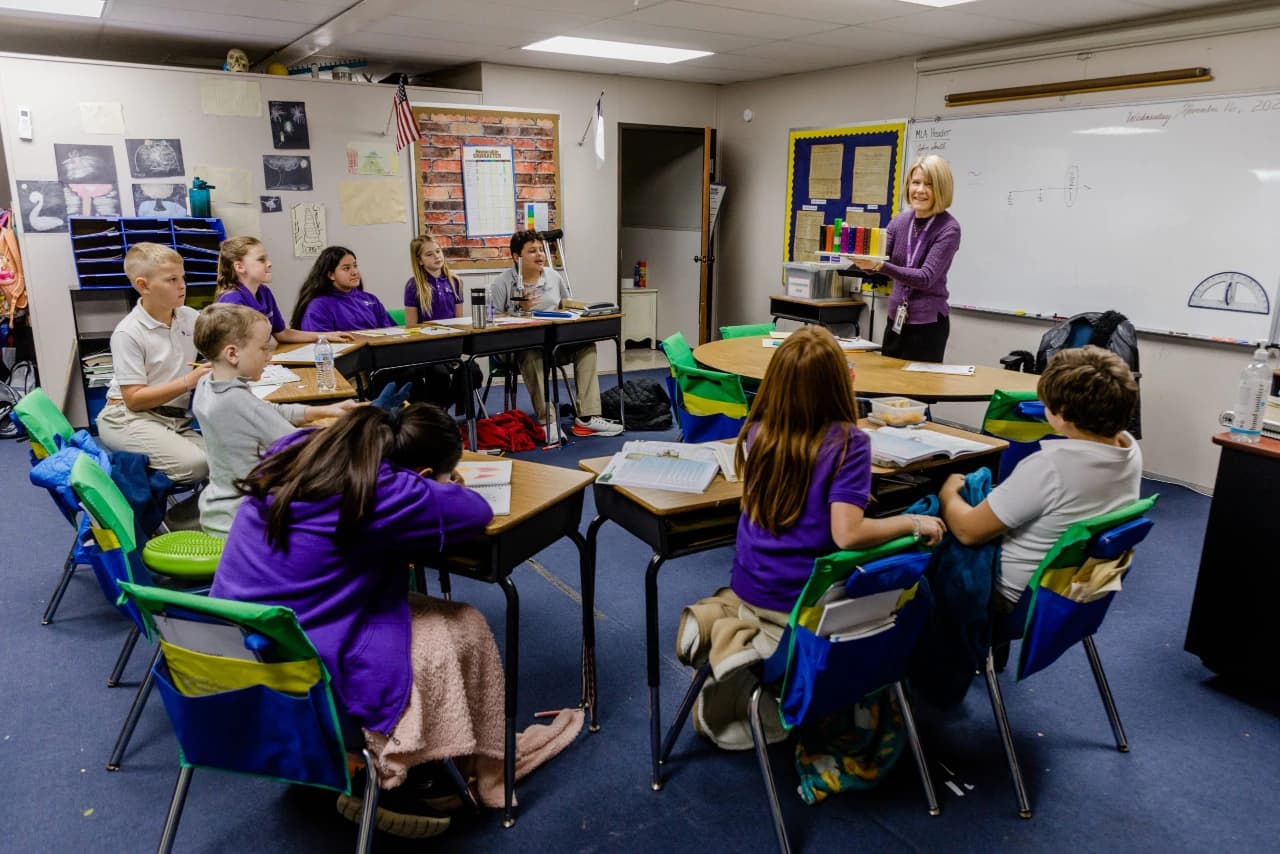
Classical education differs from progressive and conventional education in that it works with the natural developmental stages of the child. Rather than a goal of producing the next generation of workers while attempting to predict the nature of future job markets, the goals of a Classical curriculum are to
- provide a foundation of knowledge in the early years when children are able to absorb facts with ease;
- build understanding on that foundation in the middle years as students begin to think through arguments;
- teach older students wisdom as they learn to reason and effectively express themselves.
At every stage, the Classical educator is intentional about instilling wisdom and virtue in each student.
In primary classes (grammar school), learning is almost exclusively focused on knowledge acquisition, using mostly didactic teaching methods and memorization. Chants, jingles, and songs make that memorization and learning fun.
In the preteen and early teen years (the logic stage), instruction becomes more analytical, as children learn the arts of debate and critique along with a continuation of knowledge learning. These students are given the tools to develop sound reasoning through courses in informal and formal logic.
In the secondary years (the rhetoric stage), students are trained to write and speak with eloquence and originality, learning to persuade and to apply the knowledge and understanding.
Explore Our Classical Philosophy
Learn why classical Christian education is more relevant than ever in shaping disciplined minds, discerning hearts, and resilient Christian leaders.